Posts tagged: LED News

CRS Elec Lights Turned to New LED Lamp

It was reported from TORONTO that when Manhattan’s tony One Beacon Court on the Upper East Side looked for ways to reduce its energy bill, as part of a much-broader global effort to green the planet, it turned to a small Canadian company for its lighting needs.

CRS Electronics Ltd. (LED.V) based in Welland, Ont., CRS developed, designed and manufactures solid-state lamps that use light-emitting diodes (LEDs) as their light source. It’s a disruptive technology that’s on the cusp of transforming the estimated US$100 billion global lighting industry. If well designed, LEDs can provide light that is the same as or better than conventional light sources, with significant energy and cost savings. According to Strategies Unlimited, a Mountain View, Calif. research firm, the commercial and industrial market for LED replacement lamps is forecast to roughly double each year through 2013.

CRS, whose roots are in school-bus lights, makes a low-watt MR16 LED replacement lamp that replaces halogen technology. MR16s are widely used for accent, task and display lighting in stores, hotels, restaurants, condominiums, commercial buildings, museums and art galleries.

“We didn’t just want to do LED because it’s green, and it saves energy and costs. It also had to have an aesthetic value, and match up with the coloring of the bulb that was already in the hallways. And that’s what we achieved. The bulb itself was just a better product than I could get anywhere else,” he says.

He’s ordered 500 lamps, and expects a 12-to-14 month return on investment, since each lamp can burn for 50,000 hours.

The commercial market for MR16s is estimated to be about US$2.2 billion, according to industry statistics. It’s such a big market that hundreds of upstarts, primarily from China, are popping up, primarily because the lighting giants, such as GE, are looking further afield. “It’s buyer beware. There’s a lot of misleading information out there,” says Mia Paget, who manages the U.S. Department of Energy’s Solid-state Lighting product testing program, CALiPER.

The CRS MR16 is technologically and aesthetically superior, a claim that’s backed up by the results of both independent laboratory and DOE testing.

In May, CRS went public, listing on the TSX Venture Exchange.

CRS, which installed the LED street lamps in downtown Welland, is eyeing the US$61 billion street and area lighting market, where there was 0% LED penetration in 2008, according to an October 2008 Navigant Consulting report.

The Main Challenge of LED Industry

In last article, we talk about that there’s a consensus that most of those barriers. They should be removed in the next 2-3 years. Impressive energy efficiency progress are announced on a regular basis by LED manufacturers and reliability is improving as engineers become aware of the challenges posed by the design of a flawlessly integrated LED luminaire (GE recently identified more than 100 possible failure mode in LED light engines).

Multiple standardization organization are working on defining and implementing testing and performance standards and communicating them to the public. Solid state lighting is progressing niche by niche.  More municipalities are testing LED streetlight and some have already committed to massive retrofits (200,000 street lights in Los Angeles). Adoption in commercial and retails lighting, while still low in volume is progressing fast (announcements from Wall Mart, Starbucks…). While we all have our eyes focused on residential applications, it’s important to realize that homes are the smallest segments (in term of lumens) compared to industrial, commercial and municipal lighting. However, for most, it remains the ultimate frontier.

But even this application now seems within reach and LED replacement bulbs might come to your home faster that you expected. Don’t rush yet though, as low quality products are still flooding the market and might create a negative initial perception of the technology, a risk that the industry is aware off and trying to control by working on performance standard (make sure you get products meeting or exceeding the Energy star criteria for solid state lighting). In Japan, the largest electronic manufacturers are making a strong push with quality products. Toshiba Lighting and Technology introduced a 60W equivalent replacement LED bulb for JPY9,000 in late 2008. The same product now goes for less than JPY4,000. Sharp launched similar offers and the price is now expected to reach  JPY2,000 in 2010. At this pace, most now expect the cost of LED replacement bulbs to reach the $10 for 1000 lumen target commonly accepted as the “magic” number that will trigger massive adoption by 2012.

In the US, Philips released the first LED bulb to participate to LPrize contest organized by the US Department Of Energy to reward the first 60W replacement LED bulb to meet aggressive performance targets.  A lot of credible light bulb replacements could be seen at the recent Strategies In Light conference exhibition floor and CREE is planning to release a retail version of its award winning LR6. The price point at which it will be released will send a strong signal to the industry.

Accelerated Growth of LED Industry

The LED industry has entered a period of accelerated growth driven by faster and broader adoption of the technology for large LCD TV.

After riding the cell phone keypads and LCD screen backlight wave during the previous decade, the industry is on for a spectacular growth thanks to large LCD backlight applications. While similar in essence to the smaller LCD screens, the larger displays found in laptops and large flat panel TVs were until recently more difficult to illuminate with LEDs because of their large surface. One must give credit to Sony and Lumileds, now a subsidiary of Philips, for pioneering the field in 2005. However, while delivering outstanding performances, the price of those LED backlit TVs were out of reach (>$10,000) for most consumers. A strong push by Apple, Dell and other brands allowed LEDs to start being adopted in laptops in 2007. In 2010, the adoption of LED for the segment should exceed 80%. But until 6-8 months ago, the industry consensus was that broad adoption of LEDs for large displays (20” and above) was still at least a couple years away. Samsung shook the industry in the second half of 2009 by bringing into the market a flurry of breakthrough products at affordable prices. Thanks to various engineering breakthrough and a strong marketing push (LED TVs anyone??), the unexpected success of the product put large LCD TV 2 years ahead of the initial roadmap and rescued the LED industry from what was going to be its first year ever of negative growth in 2009 (2001 was a flat year).

Since then, All TV manufacturers have jumped into the bandwagons, and LG, Sony, Sharp, Vizio, Toshiba all lined up an impressive series of new LED backlit LCD TV for 2010 with aggressive pricing. The cost of LED backlit TV remains marginally higher than “old fashion” cold cathode fluorescence lamp (CCFL) TV. However the price gap is shrinking and the consumers are falling for those ultra-slim TV with high contrast ratio and in some cases, improved color gamut and reduced motion blur. However, because of the engineering tradeoffs necessary to keep cost under controls however, not all the potential benefits of LED backlit TVs are offered on every set.  But, as technology improves, LED cost decrease and economy of scale become significant, the adoption rate of LEDs in LCD TV is expected to jump from 2-3% in 2009 to more than 20% in 2010 with the most optimistic forecasting 39 millions LED TV sets for the year. The adoption rate should further increase to 70% by 2013 and volumes exceed 150 millions. The exact impact on the LED industry is difficult to quantify though: because of the mix of panel size and the variety of design options (edge lit vs. backlit, white LEDs vs. RGB), estimating the exact number of LED chip per TV set is challenging (it varies from 250 to more than 1,000 on certain models). The one sure thing however, is that LCD TV will carry the LED industry through what analysts call it second growth cycle, possibly slightly restrained by tensions on the Sapphire substrate market and the ability of equipment manufacturers to deliver the record amount of MOCVD reactors to be shipped in 2010 and of the chip manufacturer to install and qualify them on time (it takes3 months to start production on a new reactors and in some cases another 4-6 months is needed get the chips from the new reactor validated by the final customer).

So what about the next big thing for LED: General Illumination? The main barriers to a broad and immediate adoption are still here. Those are essentially:
- Energy efficiency.
- Reliability.
- Color consistency and stability.
- Lack of standardization.
- Confusing supply chain.
- Upfront cost.

LED Makers Promise to Shake up Global Market

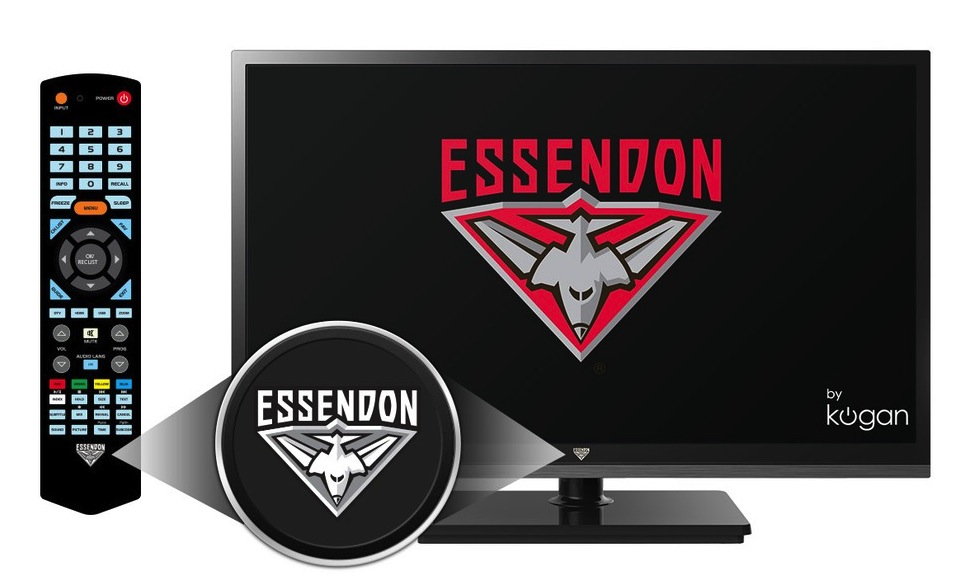
LEDs, once confined to the tiny red indicator lights on TV remote controls, have now grown to illuminate TV screens themselves and promise to shake up the global lighting market.

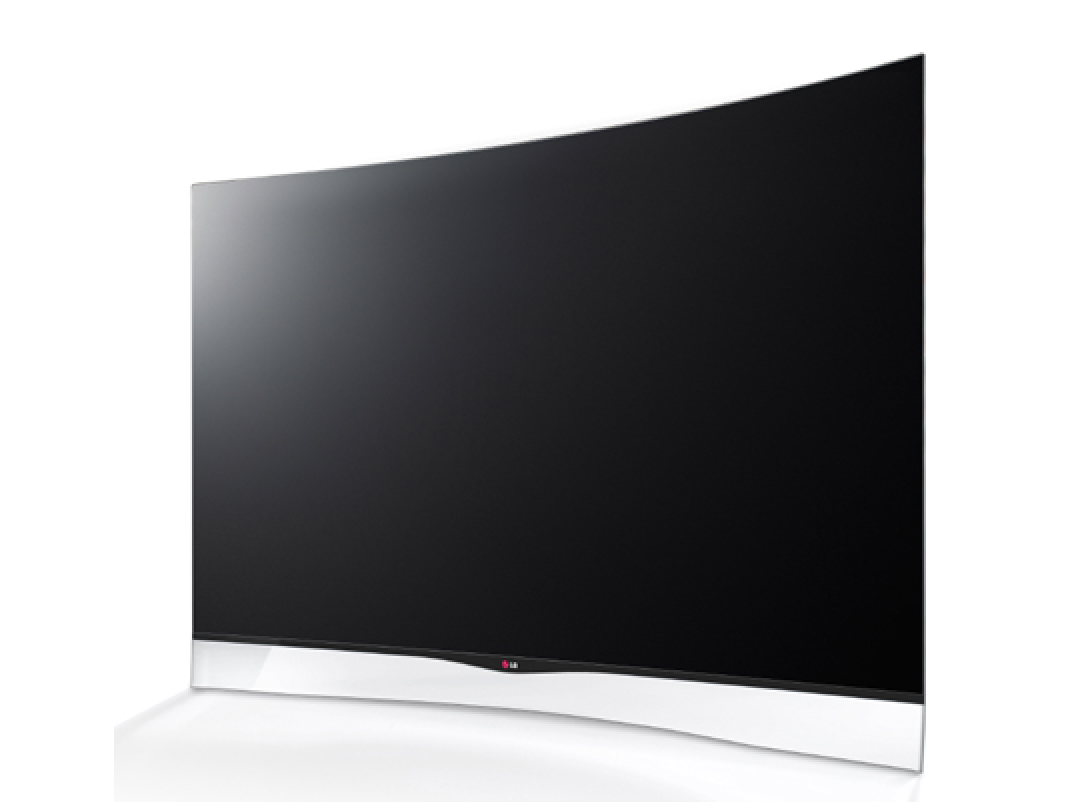
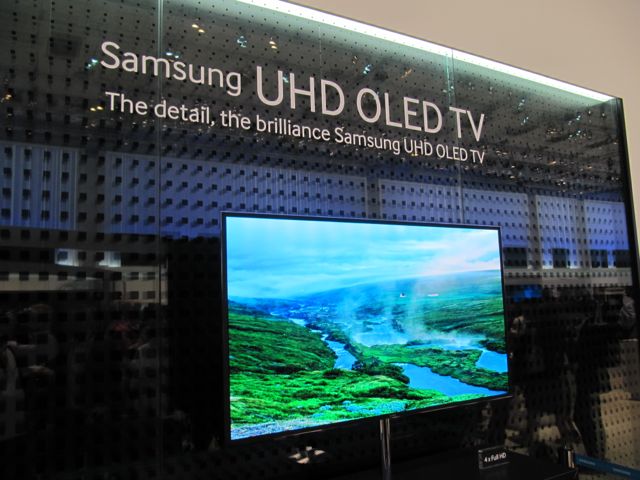
LED (light emitting diode) backlit TVs were heavily featured at the Consumer Electronics Show in Las Vegas this month, as manufacturers announced products intended to emulate the success seen by Samsung in 2009.

Samsung, which has 80 per cent of the US market for LED TVs, aims to quadruple global sales in 2010 to more than 10m.

But manufacturers such as LG, another Korean player, say Samsung will not have things all its own way as LED-backlit TVs become available at entry-level as well as premium prices. LG will offer cheaper edge-lit LED technology, which requires fewer arrays of diodes, on its entry-level TVs and full LED backlights on premium models.

LEDs have graduated from use in mobile phone screens to backlights for notebooks, PCs and now TVs and monitors.

They offer better brightness and contrast, energy savings and slimmer screens than those using the established cold cathode fluorescent lamps (CCFLs) now used for backlighting.

LED technology was first introduced in 1962, beginning with a low-intensity red light. Semiconductor-based diodes or valves produce light from the excitation of electrons as they are moved over a “light” bridge by a direct electrical current. LEDs differ from traditional incandescent light bulbs, which produce their light from heat generation.

Over the years, white LEDs have been developed by combining chips that produce different colours into a single package, or by adding a yellow phosphor layer. Improvements in light intensity and cost reductions are now resulting in wider adoption of LEDs.

Pete Moran of the DCM venture capital firm says LEDs have advantages such as longer life and greater efficiency compared with both incandescents and the energy-saving compact fluorescents with which consumers are currently replacing them.

As well as the green argument, there are manpower savings from LED’s longevity. Cities such as San Francisco, San Jose, New York and Minneapolis are testing LED street lamps that will not need regular bulb replacement by lighting crews. In retail, Walmart and Starbucks are replacing lighting in their US stores with LED bulbs to cut energy consumption.

But as big semiconductor makers such as Samsung and Micron begin to take an interest in the LED industry, it could eventually take on the same characteristics as the DRAM, or flash memory, industries, according to analyst Daniel Amir.

The LED industry will then become cyclical, with a period of oversupply as early as the second half of 2011, according to Lazard, although demand should still be growing at rates of 20 to 30 per cent a year.

Copyright The Financial Times Limited 2010. You may share using our article tools. Please don’t cut articles from FT.com and redistribute by email or post to the web.

Nanosys Do Efforts to Improve LEDs

As we all know that in this struggling economy, businesses as well as the general populace are all struggling to do more with less. In the case of LED and nanotechnology, however, that may not be necessarily a bad thing.

Take for example the work showcased at CES by Nanosys, a company that has developed a method to add nanomaterials to blue LEDs that improves the appearance of LED lighting. Their efforts have created an LED light that combines the energy efficiency of a blue LED; with a nanotechnology layer that alters its blue appearance into a warm white light that is better than standard LED lighting.

The benefits of the added nanotech material not only means improving the quality of the emitted light for backlit LED displays
, but doing so while still maintaining a low power profile. Plus Nanosys claims, the process can be added to a company’s assembly line for electronic products without the need for major retooling.

So expect to see better looking LED lighting in the near future as Nanosys nanotechnology starts to appear in televisions and other lighting products beginning later this year.

Ultrathin Inorganic LEDs

There is now a new process under development to create ultrathin, ultrasmall inorganic light-emitting diodes (LEDs) and assembling them into large arrays, which offers new classes of lighting and display systems with interesting properties.

Applications for the arrays, which you can print onto flat or flexible substrates ranging from glass to plastic and rubber, include general illumination, high-resolution home theater displays, wearable health monitors, and biomedical imaging devices.

“Our goal is to marry some of the advantages of inorganic LED technology with the scalability, ease of processing, and resolution of organic LEDs,” said John Rogers, the Flory-Founder chair professor of Materials Science and Engineering at the University of Illinois.

Compared to organic LEDs, inorganic LEDs are brighter, more robust, and longer-lived. Organic LEDs, however, are attractive because you can form them on flexible substrates, in dense, interconnected arrays. The researchers’ new technology combines features of both.

“By printing large arrays of ultrathin, ultrasmall inorganic LEDs and interconnecting them using thin-film processing, we can create general lighting and high-resolution display systems that otherwise could not be built with the conventional ways that inorganic LEDs are made, manipulated, and assembled,” Rogers said.

To overcome requirements on device size and thickness associated with conventional wafer dicing, packaging, and wire bonding methods, researchers developed epitaxial growth techniques for creating LEDs with sizes up to 100 times smaller than usual. They also developed printing processes for assembling these devices into arrays on stiff, flexible, and stretchable substrates.

As part of the growth process, a sacrificial layer of material embeds beneath the LEDs. When fabrication is complete, a wet chemical etchent removes this layer, leaving the LEDs undercut from the wafer but still tethered at anchor points.

To create an array, a rubber stamp contacts the wafer surface at selected points, lifts off the LEDs at those points, and transfers them to the desired substrate.

“The stamping process provides a much faster alternative to the standard robotic ‘pick and place’ process that manipulates inorganic LEDs one at a time,” Rogers said. “The new approach can lift large numbers of small, thin LEDs from the wafer in one step, and then print them onto a substrate in another step.”

By shifting position and repeating the stamping process, LEDs can transfer to other locations on the same substrate. In this fashion, you can create large light panels and displays from small LEDs made in dense arrays on a single, comparatively small wafer. And, because the LEDs can be placed far apart and still provide sufficient light output, the panels and displays can be nearly transparent. The thin device geometries allow the use of thin-film processing methods, rather than wire bonding, for interconnects.

In addition to solid-state lighting, instrument panels, and display systems, the new method also allows for flexible and even stretchable sheets of printed LEDs, with potential use in the health-care industry.

“Wrapping a stretchable sheet of tiny LEDs around the human body offers interesting opportunities in biomedicine and biotechnology,” Rogers said, “including applications in health monitoring, diagnostics, and imaging.”

LED Backlighting

It is said that energy-saving flat-panel television sets are about to become common in shops, spawning a whole new range of technical words to understand in Berlin.

Most manufacturers believe the best way to reduce TV power consumption is to change the type of lamp at the back of the flat panel, as well as to devise clever ways to reduce wasted light output.

The newest liquid-crystal-display (LCD) television sets are to feature LED backlights instead of the cold cathode fluorescent lamps (CCFL) which have done the job in the past. LED stands for light- emitting diode.

That is where the confusion starts, because at the same time, the electronics industry has been trying, without much success, to develop TV-sized displays where the image itself is formed by a matrix of LEDs.

LED backlighting has got nothing to do with that technology: all it changes is the light source that shines through the LCD screen.

Word has been spreading for a decade that LED light bulbs are more efficient than fluorescent lamps, so it is no surprise that TV manufacturers are also turning to this new light source.

Philips, for example, claims an energy saving of 40 per cent on its televisions.

The different ways of configuring this new type of backlight are sure to set off more confusion.

The simplest way to deploy the LEDs is around the four edges of the screen and let the light diffuse across the back of the screen. This is cheaper, and salespeople will make a point of explaining that these ‘edge-lit’ displays are even thinner than their predecessors.

‘For the bigger screens, this requires about 500 LEDs,’ explains Peter Koch of LG Germany.

More expensive are the so-called direct LED backlights. Instead of being placed around the edges, these LED lamps are arrayed right across the back of the screen. Direct-LED backlighting is a smart idea because the intensity of the light can be dimmed behind dark parts of the image. This ‘local dimming’ creates deeper, more natural blacks.

‘If the image is of people under a night sky,’ all the LEDs behind the sky will be turned off so that it really seems dark,’ explains Sascha Lange of Toshiba Germany.

This matters, because LCD televisions are often thought to be a degree inferior when compared to plasma flat-panel televisions. The black on existing LCD screens is generally a dark grey, and colours generally seem washed out when viewed off-centre.

Over time, local dimming also helps to save electricity and keep the TV set cooler.

The new backlights generally use LEDs that give off white light, but there is a third variant, the so-called RGB backlight system, which uses a mixture of red green and blue LEDs.

This will only be offered in the most expensive sets, aimed at buyers who want the very best. In fact, television broadcasts do not demand such a subtle graduation of colours, but the difference will be visible while watching the highest-quality high-definition films from Blu-ray discs.

Energy Saving Star – LED Lighting

In your home, lighting may be 10 percent of your bill. But in an office building it’s probably 40 percent, and so if you reduce your lighting energy consumption by a large fraction, the savings will be huge,” said James Brodrick, who leads the DOE’s solid-state lighting program.

A fact sheet from Brodrick’s office says this about LEDs: “In the coming decade, they will become a key to affordable net-zero energy buildings, buildings that produce at least as much energy annually as they use from the grid.”

The technology is advancing quickly, and costs will continue to drop, Brodrick said. The DOE tests LEDs and sets performance and efficiency guidelines under its Energy Star program.

LEDs are directional lights, used in recessed lighting and under-counter lights, for example. They’re not yet available as bulbs that cast light all around and fit in ordinary sockets.

“There’s an enormous and exciting potential, but we have a long way to go before we see anything besides directional lighting,” said Jeffrey P. Harris, the vice president for programs at the Alliance to Save Energy, a nonprofit group that promotes energy efficiency.

Even so, LEDs already are used to light offices, hotels, restaurants and other businesses.

The DOE predicts that LEDs will have better performance capability than fluorescent lighting in the next few years, and that they’ll continue to improve after that. They’re now comparable with fluorescent fixtures in efficiency, and the DOE says its Energy Star LEDs last two to five times longer.

Cost is the biggest reason that LEDs aren’t used more widely, Brodrick said.

LEDs have other advantages: They can be dimmed, don’t emit heat, don’t contain mercury – unlike compact fluorescents – and can produce warm-toned light.

Home Depot, the world’s biggest retailer of light bulbs, is starting to stock LED bulbs this summer and plans to have 10 kinds by September, said Jorge Fernandez, who’s in charge of light bulb purchases for the company.

Philips is working on many kinds of LEDs, including one to replace a 40-watt incandescent bulb that’s scheduled to be available next year, she said.

Derrick Hall of RE/Construct Inc. in Asheville, N.C., said that residential customers weren’t asking for LEDs because of the high upfront cost. Still, he’s hearing of some nonresidential customers who are looking into LEDs for the energy savings.

LEDs are much better than other lighting options, Hall said. The quality of the light is “far superior,” they offer big energy savings and there’s no cost to society for dealing with mercury, he said. Mercury, a neurotoxin, is found in small amounts in compact fluorescent bulbs.

Night Vision LED Book Light

LED Book LightIntroducing a LightWedge Night Vision LED Book Light, which is an innovative customized design of LightWedge Original Booklights specially made for sailors, astronomers and pilots to provide an easier reading experience without waking others that may be within eyesight of you.

The red LED light illuminates the pages uniformly and helps in reading charts and maps in total darkness. In fact this can be used by geeky bookworms too who love to read in the night. The red light is extremely soothing for the eyes and the light doesn’t really spread beyond the page and hurt the eyes of the reader or disturb other people around.

The LightWedge LED booklight are the true reading lights and are more useful than the usual table lamps. They are portable, battery operated and when placed on the pages they just uniformly illuminate the prints and make night reading a true pleasurable experience. Each is only $45.89, with different models and colors available.

This Night Vision innovation will be useful for sailors, astronomers and pilots who need to consult charts and maps while navigating in the dark. Red light doesn’t really illuminate the darkness around like the white light. It can be used along with Night Vision Goggles with which one can see far in to darkness.

One can really hide in the dark and read comfortably in night vision lights. And if one wants to read something on the sly no need to hide under the bed or blankets with torch lights or table lamps, use LightWedge Night Vision LED Bookcase instead!

Do You Want to Make Your Bath Time More Fun?

Colourful LED shower lightsWe have always marveled at the simplicity and the beauty of the new shower head, which uses LED lights to give it an extra charm and makes the cleaning up time more colorful and fun, especially great for kids.

I haven’t really seen anything like this, and I think it is quite amazing. Using this shower, bath time will never be dull again, whether you are 3 years old, or you are 80. There are four different colors that appear on the shower, illuminating the water.

These lights are not just really cool to look at, but also have a certain level of practicality associated with them. The color of the LED light changes with temperature, and so if you have really hot water coming out of the shower, the lights glow red,and the color automatically changes with any fluctuations in temperature, going through yellow and blue and finally green for really cold water. This really helps because you will no longer have to test the water temperature before you step into the shower, and you can adjust the water accordingly until you reach the color that you want to.

Colourful LED shower lightThe best part is you don’t need any additional batteries to operate the lights, they are powered by the water pressure, and this makes it an eco-friendly option. The shower head is also just the right size, very easy to install (just unscrew your old shower head and replace it with this one) and very sturdy, having been made with ABS plastic. They fit on to the standard shower pipe size, and so they are suitable for almost every bathroom.

This is most definitely the perfect accessory to make bath time more romantic, or even to entice your kids into showering. It is said that its price is around $67, so I think it isn’t even too expensive to consider, right?