Make Your Kitchen Glaring at You

Light has been on my mind a lot lately.

Probably, though, it’s because whenever I’m in my kitchen, I am pinned beneath the clinical glare of a monstrous 45-by-16-inch fluorescent light fixture situated over my island. Just a few feet away, a second one (22 by 22 inches) stares down from above the sink. The effect is far from soothing, and in fact rather unsettling, as though my kitchen were a morgue and my island an autopsy table.

The good news, as I contemplate a kitchen overhaul in the (hopefully) near future, is that lighting in kitchens has changed a lot since the previous owner of my home remodeled the space some 15 years ago.

Kitchen designer Mary Galloway of Onesta Design in Alexandria agrees, saying she views the kitchen as a place of many scenes set, in large part, by how it is lit. “You think about someone cooking, someone eating, someone snacking at midnight,” Galloway says. ” . . . Your lighting needs change depending on the scene.”

Recessed lighting, which provides the general lighting in many kitchens these days, has come a long way, says designer Jennifer Gilmer of Jennifer Gilmer Kitchen & Bath in Chevy Chase. Most types now use smaller cans than the once-standard six-inch size, and incandescent bulbs have been replaced by more efficient lights.

Indeed, just as we’ve seen the proliferation of tiny, bright LED (light-emitting diode) bulbs on trees and roofs during the holidays, so are these energy-efficient lights making their way into the kitchen, not only in recessed lighting but also in task and accent lights.

More and more kitchens are also adding accent lights — those that draw attention to a particular appliance or decorative piece, the inside of a cabinet, or the so-called toe-kick space just above the floor — though the latter seems to have its detractors. “I would say that 50 percent of our customers love the toe-space lighting, while the other 50 percent see no point in it,” says Anderson. Its primary function (and appeal) is that it can softly light the kitchen at night, he says.

Pendant lights continue to be popular. They are “a good way to add color and some bling,” Anderson says. Gilmer says the sheer variety in styles makes pendant lighting a good option for almost any kitchen. In fact, it was a pendant light that helped solve a puzzle for one of Gilmer’s clients. “This particular person has contemporary tastes, but we needed something that would fit in with the traditional look of their Georgetown brownstone.” In the end she chose a pair of spare, vessel-shaped frosted glass and chrome pendants to hang above the sink and adjacent cream, black and gray mottled granite countertop.

CRS Elec Lights Turned to New LED Lamp

It was reported from TORONTO that when Manhattan’s tony One Beacon Court on the Upper East Side looked for ways to reduce its energy bill, as part of a much-broader global effort to green the planet, it turned to a small Canadian company for its lighting needs.

CRS Electronics Ltd. (LED.V) based in Welland, Ont., CRS developed, designed and manufactures solid-state lamps that use light-emitting diodes (LEDs) as their light source. It’s a disruptive technology that’s on the cusp of transforming the estimated US$100 billion global lighting industry. If well designed, LEDs can provide light that is the same as or better than conventional light sources, with significant energy and cost savings. According to Strategies Unlimited, a Mountain View, Calif. research firm, the commercial and industrial market for LED replacement lamps is forecast to roughly double each year through 2013.

CRS, whose roots are in school-bus lights, makes a low-watt MR16 LED replacement lamp that replaces halogen technology. MR16s are widely used for accent, task and display lighting in stores, hotels, restaurants, condominiums, commercial buildings, museums and art galleries.

“We didn’t just want to do LED because it’s green, and it saves energy and costs. It also had to have an aesthetic value, and match up with the coloring of the bulb that was already in the hallways. And that’s what we achieved. The bulb itself was just a better product than I could get anywhere else,” he says.

He’s ordered 500 lamps, and expects a 12-to-14 month return on investment, since each lamp can burn for 50,000 hours.

The commercial market for MR16s is estimated to be about US$2.2 billion, according to industry statistics. It’s such a big market that hundreds of upstarts, primarily from China, are popping up, primarily because the lighting giants, such as GE, are looking further afield. “It’s buyer beware. There’s a lot of misleading information out there,” says Mia Paget, who manages the U.S. Department of Energy’s Solid-state Lighting product testing program, CALiPER.

The CRS MR16 is technologically and aesthetically superior, a claim that’s backed up by the results of both independent laboratory and DOE testing.

In May, CRS went public, listing on the TSX Venture Exchange.

CRS, which installed the LED street lamps in downtown Welland, is eyeing the US$61 billion street and area lighting market, where there was 0% LED penetration in 2008, according to an October 2008 Navigant Consulting report.

Revolutionary LED Showroom Opened in Texas

It was reported that LED Illumination Direct opens its one-of-a-kind, green showroom in the Waco area. This 2,500-square-foot showroom hosts LED Illumination Direct’s 200 different varieties of LED products. LED Illumination Direct’s showroom demonstrates LED lighting capabilities by comparing its LED lights to incandescent, CFLs, and Fluorescent lighting and showing various light spectrums and colors available in the LED light.

“Our doors are open to commercial, industrial and residential consumers who are looking for the best selection of quality LED products to provide energy efficiency and solid state lighting,” says Greg Klepper, CEO of LED Illumination Direct.

LED Illumination Direct’s lights are recyclable, energy efficient and cost effective and emit 90% less heat than a conventional bulb. The LED low emission bulbs can be touched by the human hand, unlike that of incandescent, CFLs, and Fluorescent lights. The showroom is set up where the lights can be touched, held and controlled by anyone present.

“Greg Klepper and LED Illumination Direct produce the highest quality LED products on the market today and are the leaders of the LED lighting industry,” said Anthony Newberg, Senior Vice President Sales & Marketing, Dealers Electrical Supply Company. “Without LED Illumination Direct the lighting industry would not be where it is today.” Dealers Electrical Supply is the authorized distributor in Texas for LED Illumination Direct.

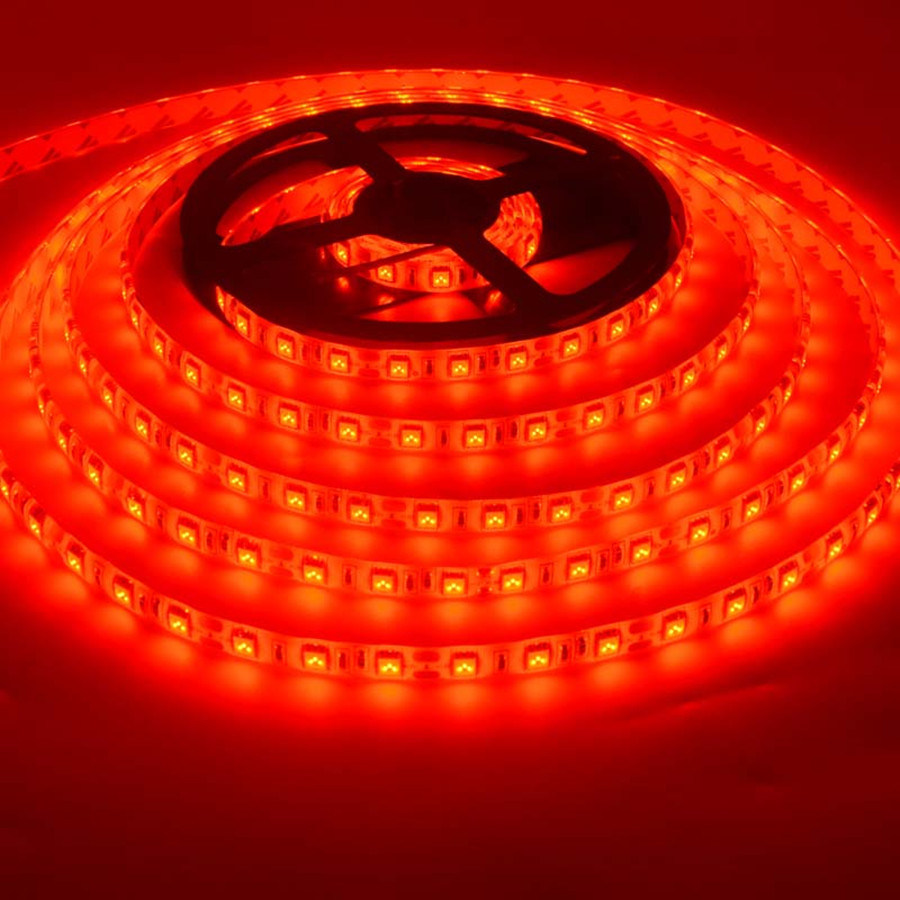
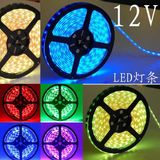
The technologically advanced showroom at LED Illumination Direct displays LED lighting products ranging from LED tube lights, LED high power bulbs and spotlights, LED household lights, LED PAR/Flood lights, LED flexible strips and LED Modules.

LED Lighting Types include:

• High Bay
• High Power Bulb
• Household Bulb
• Low Bay Light
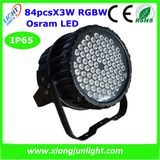
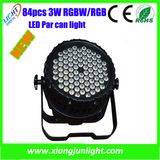
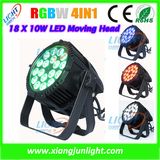
• PAR Light
• Street Lights
• Tube Light
• Bi-Pin Down Light
• Growlights
• Grid Lights
• Wall Washers

Green Mountain Power Plans to Go LED

As we all know that new lights that save energy and lower emissions might be coming soon to a street near you.

Green Mountain Power plans to replace worn-out street lights throughout its service area with energy-efficient, long-lasting LEDs. The LED lights have a life span of more than 25 years, compared to the 5 to 7 years for traditional street lamp bulbs.

LEDs are traditionally used in Christmas tree lights, newer flash lights and basketball scoreboards. They use a different technology from standard incandescent bulbs.

“By reducing the amount of electricity that you use by more than half, it eliminates any environmental effects that will be needed to produce that power,” said Dotty Schnure of GMP. “Also, with the lights they’ll be replacing, mercury lights, those lights have mercury in them and have very specific disposal issues. With LED, we’ll be avoiding all the mercury disposal issues.”

GMP submitted the plan to the Vermont Public Service Board. If approved, the lights could be installed as early as March 1.

Supertex LED Driver Uses Closed-Loop System to Deliver Maximum LED Light Performance

It was reported from SUNNYVALE, CA on Feb 17 that supertex /quotes/comstock/15*!supx/quotes/nls/supx  (SUPX  25.70, +0.05, +0.19%) , a recognized leader in high voltage analog and mixed signal integrated circuits (ICs), today introduced the HV9963, a closed-loop LED driver IC with pulse width modulated (PWM) dimming capability designed to optimize LED performance and efficiency and extend LED life. The IC excels in DC/DC applications such as RGB or white LED backlighting, LCD TVs and monitors, and LED lamps for general lighting.

The HV9963 utilizes a closed-loop system to control the current going to the LED string, which is an active, real-time system that continuously monitors the LED current via sense resistors. The HV9963 includes a 1.0MHz transconductance amplifier with a tri-state output, which closes feedback loops in the sensing process and provides accurate current control. It can be synchronized in applications requiring multiple LED drivers to prevent the system sub-harmonic oscillations that are often associated with driving multiple driver schemes.

The HV9963 also features hiccup mode protection for both short- and open-circuit conditions, and a high PWM dimming ratio. The IC operates in a constant frequency mode for use in a variety of converter topologies such as buck, boost and SEPIC.

“The HV9963’s closed-loop system enables accurate line and load control of the LED current over its entire operating range,” states Ahmed Masood, Vice President of Marketing for Supertex. “This IC also includes controls that allow PWM dimming at very low duty cycles, resulting in a contrast ratio of up to 5,000:1.”

The HV9963 is available in a 16-lead SOIC package (HV9963NG-G). The part is RoHS compliant. Samples are available from stock. Lead-time for production quantities is 4-6 weeks ARO. Pricing is US$0.85 each for the HV9963NG-G in 1K quantities.

About Supertex Supertex, Inc. is a publicly held mixed signal semiconductor manufacturer, focused in high voltage analog and mixed signal products for use in the medical, LED lighting, imaging, industrial, and telecommunication industries.

New Greensburg City Hall sign Plan to Use Solar Lights

It was reported that a new Greensburg City Hall sign has been under way for a couple of weeks, but a lot of the final pieces came together this week.

First came the LED light bars, unwrapped by Curtis Shaddox, president of Kansas City-based Sunpower Sign. Brian Eliot, manager of the Sign House in south Salina, grabbed a 12-volt power pack from a cordless tool and touched the leads on the light bar to the contacts to make sure it worked.

The permanent power source arrived with Sunpower executive vice president Troy Haefner from Minnesota, who carried a roll of flexible solar film wrapped around each arm.

Like much of the rest of rebuilt Greensburg, the new City Hall sign packs some serious environmentally friendly tech: the LED lights will use a fraction of the power a bank of fluorescent tubes would, and the solar film will power it.

The Sign House has been using LED lighting on some signs for about five years, Eliot said, “But this is our first experience with solar power. It’s very new for the industry and definitely for this area.”

The sign was scheduled to be delivered to Greensburg on Friday, though it won’t be permanently installed until warmer weather, when the concrete base can be poured.

The design calls for a bank of LEDs at the top and bottom of the sign, illuminating the lettering and pushing light through a frosted acrylic layer near the top, causing a “glowing halo” effect, Eliot said.

Shaddox said the LEDs will have a 15-year lifespan, as opposed to about five years for a fluorescent tube — and there’s no ballast to go bad.

Eliot said solar-powered signs will likely become an important part of his company’s business, and he and his employees are having fun learning about the new technology.

The flexible solar panels are also a relatively new technology and are starting to replace older designs, which are heavier, bulkier and more fragile.

And, Shaddox said, the thin film will generate power in almost any light.

“You don’t need full sun, and it doesn’t have to be tilted at 30 degrees south to get the right angle,” he said, explaining those benefits allow for more design possibilities. “Instead of this big panel standing there, we can just apply it to the top of the sign.”

NASA and the military have used flexible solar film for several years, but as more companies start producing it, the price is dropping to where it’s cost-effective.

“The cost per kilowatt is dropping every week,” Shaddox said.

The adhesive-backed solar film has about a 25-year lifespan, Shaddox said, and is much more resistant to damage than more traditional photovoltaic panels.

“You could take a box knife and cut it, and that one area won’t work any more, but the rest of it will,” he said. “And, it’s got a teflon coating, so you can spray-paint it and just clean it off.”

A combination of advances in solar power and LED technology makes such signs possible, Shaddox said; it wouldn’t be practical to try to power a fluorescent-tube sign with solar panels.

The Main Challenge of LED Industry

In last article, we talk about that there’s a consensus that most of those barriers. They should be removed in the next 2-3 years. Impressive energy efficiency progress are announced on a regular basis by LED manufacturers and reliability is improving as engineers become aware of the challenges posed by the design of a flawlessly integrated LED luminaire (GE recently identified more than 100 possible failure mode in LED light engines).

Multiple standardization organization are working on defining and implementing testing and performance standards and communicating them to the public. Solid state lighting is progressing niche by niche.  More municipalities are testing LED streetlight and some have already committed to massive retrofits (200,000 street lights in Los Angeles). Adoption in commercial and retails lighting, while still low in volume is progressing fast (announcements from Wall Mart, Starbucks…). While we all have our eyes focused on residential applications, it’s important to realize that homes are the smallest segments (in term of lumens) compared to industrial, commercial and municipal lighting. However, for most, it remains the ultimate frontier.

But even this application now seems within reach and LED replacement bulbs might come to your home faster that you expected. Don’t rush yet though, as low quality products are still flooding the market and might create a negative initial perception of the technology, a risk that the industry is aware off and trying to control by working on performance standard (make sure you get products meeting or exceeding the Energy star criteria for solid state lighting). In Japan, the largest electronic manufacturers are making a strong push with quality products. Toshiba Lighting and Technology introduced a 60W equivalent replacement LED bulb for JPY9,000 in late 2008. The same product now goes for less than JPY4,000. Sharp launched similar offers and the price is now expected to reach  JPY2,000 in 2010. At this pace, most now expect the cost of LED replacement bulbs to reach the $10 for 1000 lumen target commonly accepted as the “magic” number that will trigger massive adoption by 2012.

In the US, Philips released the first LED bulb to participate to LPrize contest organized by the US Department Of Energy to reward the first 60W replacement LED bulb to meet aggressive performance targets.  A lot of credible light bulb replacements could be seen at the recent Strategies In Light conference exhibition floor and CREE is planning to release a retail version of its award winning LR6. The price point at which it will be released will send a strong signal to the industry.

Accelerated Growth of LED Industry

The LED industry has entered a period of accelerated growth driven by faster and broader adoption of the technology for large LCD TV.

After riding the cell phone keypads and LCD screen backlight wave during the previous decade, the industry is on for a spectacular growth thanks to large LCD backlight applications. While similar in essence to the smaller LCD screens, the larger displays found in laptops and large flat panel TVs were until recently more difficult to illuminate with LEDs because of their large surface. One must give credit to Sony and Lumileds, now a subsidiary of Philips, for pioneering the field in 2005. However, while delivering outstanding performances, the price of those LED backlit TVs were out of reach (>$10,000) for most consumers. A strong push by Apple, Dell and other brands allowed LEDs to start being adopted in laptops in 2007. In 2010, the adoption of LED for the segment should exceed 80%. But until 6-8 months ago, the industry consensus was that broad adoption of LEDs for large displays (20” and above) was still at least a couple years away. Samsung shook the industry in the second half of 2009 by bringing into the market a flurry of breakthrough products at affordable prices. Thanks to various engineering breakthrough and a strong marketing push (LED TVs anyone??), the unexpected success of the product put large LCD TV 2 years ahead of the initial roadmap and rescued the LED industry from what was going to be its first year ever of negative growth in 2009 (2001 was a flat year).

Since then, All TV manufacturers have jumped into the bandwagons, and LG, Sony, Sharp, Vizio, Toshiba all lined up an impressive series of new LED backlit LCD TV for 2010 with aggressive pricing. The cost of LED backlit TV remains marginally higher than “old fashion” cold cathode fluorescence lamp (CCFL) TV. However the price gap is shrinking and the consumers are falling for those ultra-slim TV with high contrast ratio and in some cases, improved color gamut and reduced motion blur. However, because of the engineering tradeoffs necessary to keep cost under controls however, not all the potential benefits of LED backlit TVs are offered on every set.  But, as technology improves, LED cost decrease and economy of scale become significant, the adoption rate of LEDs in LCD TV is expected to jump from 2-3% in 2009 to more than 20% in 2010 with the most optimistic forecasting 39 millions LED TV sets for the year. The adoption rate should further increase to 70% by 2013 and volumes exceed 150 millions. The exact impact on the LED industry is difficult to quantify though: because of the mix of panel size and the variety of design options (edge lit vs. backlit, white LEDs vs. RGB), estimating the exact number of LED chip per TV set is challenging (it varies from 250 to more than 1,000 on certain models). The one sure thing however, is that LCD TV will carry the LED industry through what analysts call it second growth cycle, possibly slightly restrained by tensions on the Sapphire substrate market and the ability of equipment manufacturers to deliver the record amount of MOCVD reactors to be shipped in 2010 and of the chip manufacturer to install and qualify them on time (it takes3 months to start production on a new reactors and in some cases another 4-6 months is needed get the chips from the new reactor validated by the final customer).

So what about the next big thing for LED: General Illumination? The main barriers to a broad and immediate adoption are still here. Those are essentially:
- Energy efficiency.
- Reliability.
- Color consistency and stability.
- Lack of standardization.
- Confusing supply chain.
- Upfront cost.

PITTSBURGH Considers LED Streetlights

It was said from a new study that Pittsburgh needs to replace 40,000 streetlights, and officials have the option of installing LED lights.

According to officials, this would be a big expense now, but could mean big savings later.

The city has already begun to test LED lights by installing 150 in Shadyside and South Side.

Researchers at the University of Pittsburgh concluded that the city could save millions of dollars by switching to LED lights.

The lights may be a bit more expensive, but they last longer and they’re much more energy efficient than the current lights.

Researchers studied several different options but concluded that LED offered the best bang for the buck. “An average streetlight would last about two years before you have to replace it; an LED light would last 15 years,” said Councilman Bill Peduto. “The energy costs associated with it are about 70 percent less than the regular streetlights. Put those together and you will see savings of nearly $2 million annually.”

Peduto said his goal is for Pittsburgh to become a leader in LED lighting. He hopes the city will begin installing more LED lights by the end of this year.

Fantastic Motion Sensing LED Light

led motion sensor lightsThere are times when it’d make life a lot easier if lights would just come on.  Be it because you usually have your hands full in that area or any other reason, it’d just be nice.  Now this little motion sensor won’t turn on all the lights in the room, but it will turn on a small light to help you find your way.  Plus it could be used as a security device, so you’ll know if someone is moving around where they shouldn’t.

This simple little light could even be used in other areas besides in your home.  It could also be grabbed for when you go camping if you need some small lights to keep you from tripping over anything.  On the light itself you can adjust the sensitivity of the motion sensor.  You can also just shut off the light entirely.  It runs on 4 AAA batteries which aren’t actually included.